
Paint and finish
Auto Painting & Refinishing in Sachse, Handled Coat by Coat
Good paint work is mostly planning: the right color formula, a clean booth, proper cure time and blending that hides the edges. We line all of it up and tell you when the car will be ready.
Talk through your paint job at (000) 000-0000Why Paint Takes a Plan
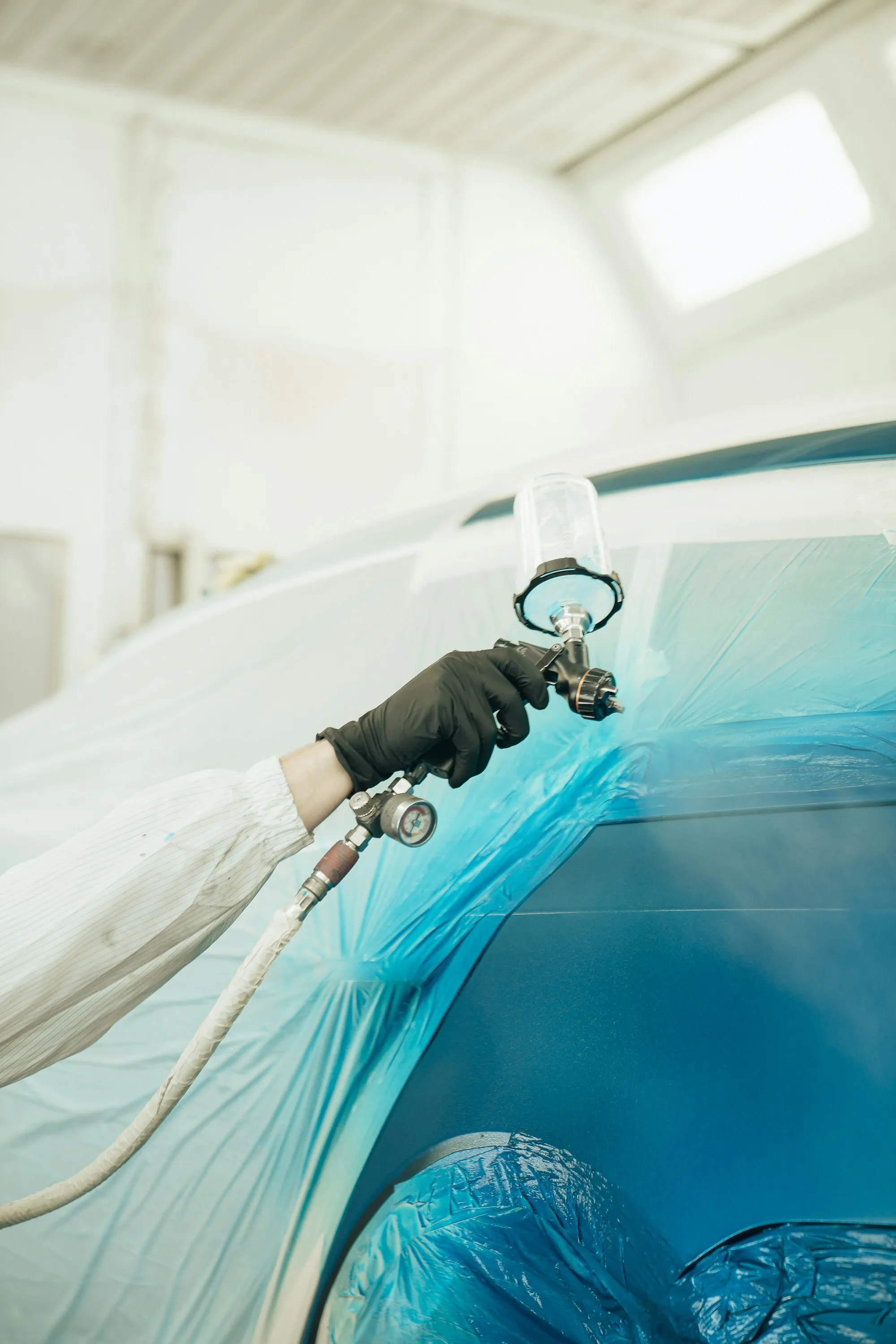
A car's color isn't just the code on the door jamb. The same code can come out a shade lighter or darker depending on the plant, the model year and how long the car has sat in the North Texas sun. That's why our refinishing starts with a computer reading of the actual panel, followed by test sprays compared against the car. The paint goes on in a downdraft booth, where filtered air pulls dust and overspray down and away from the finish. To keep the new color from standing out, we blend it into the panels next to the repair so the transition fades out gradually. Each stage needs time to cure, and we build that time into the schedule up front so the date we give you is one we can keep. Whether it's a single fender or a whole side after a scrape along a Woodbridge Parkway wall, the process is the same.
Each Stage of a Refinish
Paint work is a sequence. Here is each stage and why it's in the plan.
Spectrophotometer color reading
A handheld camera reads the color of a nearby panel, and the software suggests a formula tuned to your car rather than the factory average.
Test panels before the car
We spray a sample card and hold it against the car in natural light. The formula is adjusted until the two agree.
Sanding and taping the area
Panels are cleaned, sanded and masked edge to edge so paint lands only where it should.
Primer that sets the base
Primer fills fine sanding marks and gives the color something even to bond to. It's sanded smooth before color goes on.
Downdraft booth application
Base coat and clear coat are sprayed in a booth with filtered, downward airflow that keeps dust out of the finish.
Blending into neighbor panels
Color is faded into the adjacent panels so your eye can't find the line where new paint meets old.
Cure time in the schedule
Each coat gets the time it needs. We plan around cure time instead of rushing it, which is how the finish holds up.
Polish and gloss review
After curing, the paint is polished and checked against the rest of the car in daylight for color and shine.
How a Paint Job Moves Through the Shop
- Step 1
Read the color and plan the booth
We look at the damage and decide which panels need paint and which need blending. The color is read off the car and a formula is mixed. Booth time is scheduled once the body work ahead of it has a firm date. You get the expected timeline at the estimate.
- Step 2
Prep, prime and spray
Panels are sanded, cleaned and masked, then primed and smoothed. A test card confirms the color before anything touches the car. Base coat and clear go on in the downdraft booth. Then the car sits through its cure time before anyone handles it.
- Step 3
Finish, check and release
The new paint is polished and inspected in sunlight and shop light. We confirm the blend can't be picked out from normal viewing distance. Trim and parts go back on. Then we reach out so you can plan the pickup.
Why Our Paint Holds Up to a Close Look
Color checked on a card first
Spraying a test card before the car catches a mismatch while it's still easy to adjust. The car only gets paint once the card agrees.
Blending is part of every plan
We don't count on a perfect match at a hard edge. Blending makes the repair disappear even when the old paint has aged.
Cure time is built in, not skipped
Rushed paint can shrink, dull or trap dust. We plan the schedule around the chemistry so the finish lasts.
Ready to Sort Out Your Paint?
Faded, scraped or mismatched paint is easier to plan around once you know the scope. Let us know which panels are bothering you, and we'll find a time to look and give you a timeline.
(000) 000-0000 — plan your refinish